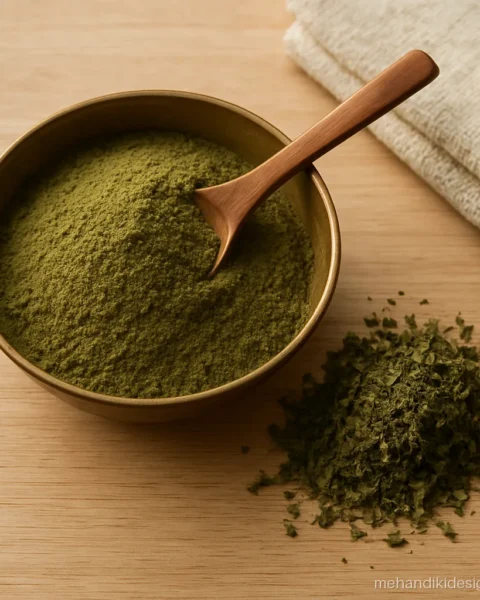
A deep mehandi colour depends on three things: good henna, enough time on the skin, and the right care for the first 24 hours. The design matters, but a beautiful pattern in pale orange never looks as good as a simple one in rich maroon. This guide explains, step by step, how to make mehandi ka rang gehra, the way experienced mehndi artists do it before every wedding.
We start with where the colour comes from: the mehandi plant and its leaves. Then we cover how to pick a safe herbal mehandi powder, how to mix paste, how long to keep it on, and what to do after you scrape it off. You will also learn why black henna is risky and why your colour changes over two days.
Once your colour is sorted, pick a design from our bridal mehandi design, simple mehandi design or back hand mehandi design galleries.
From Mehandi Leaves to Paste
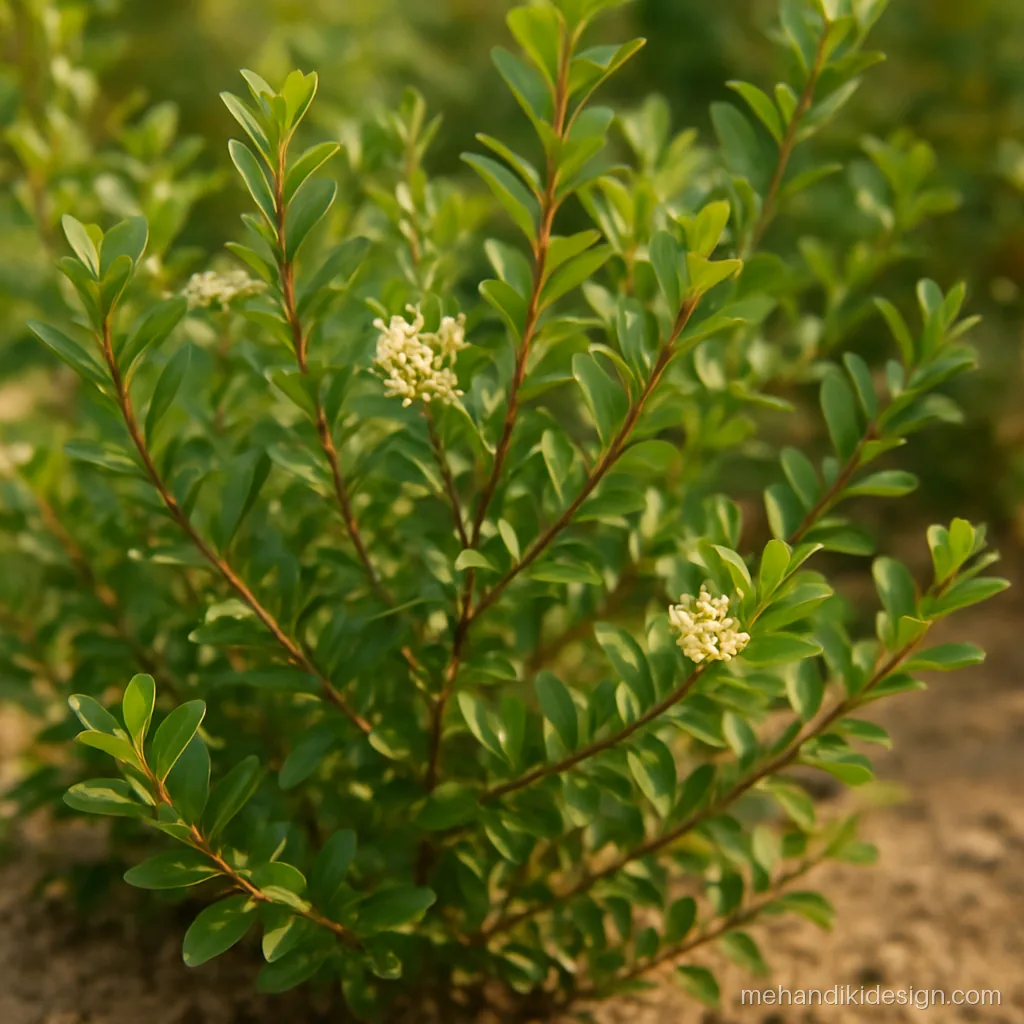
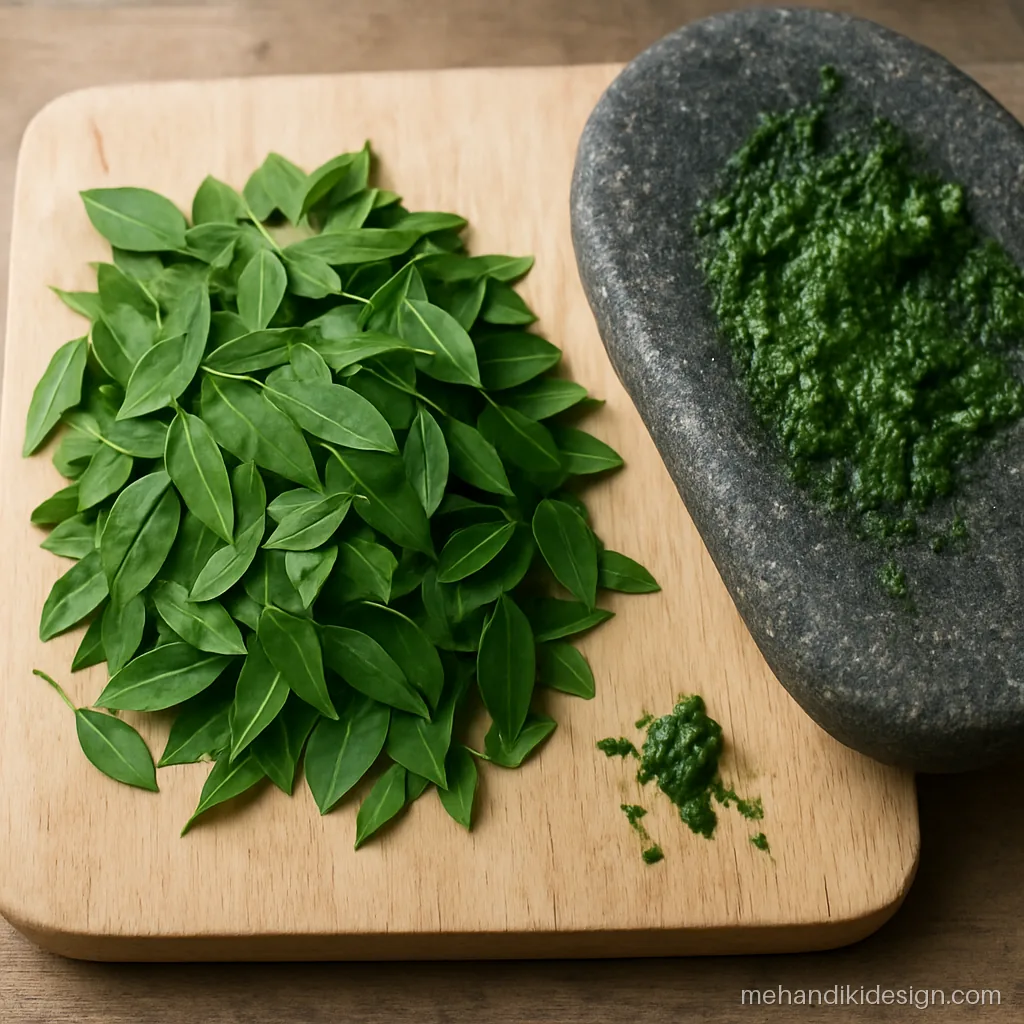
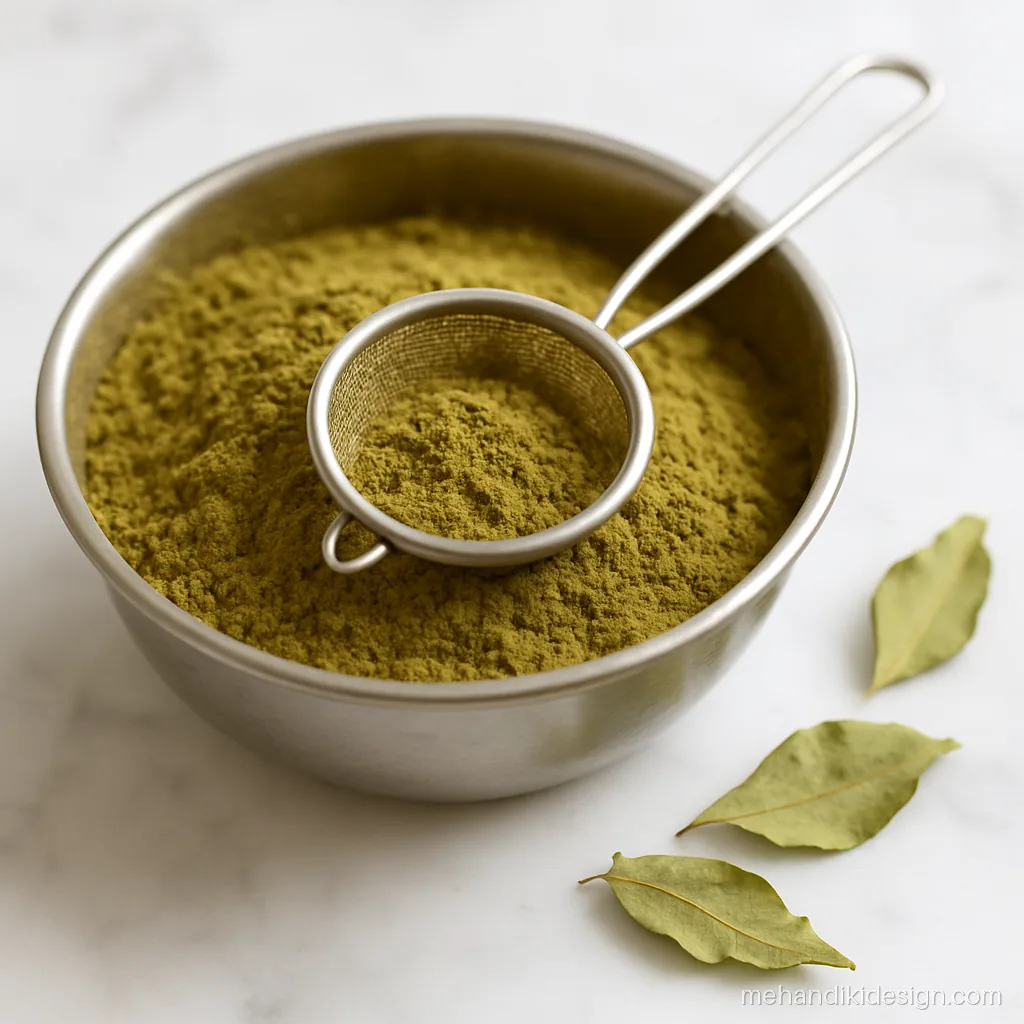
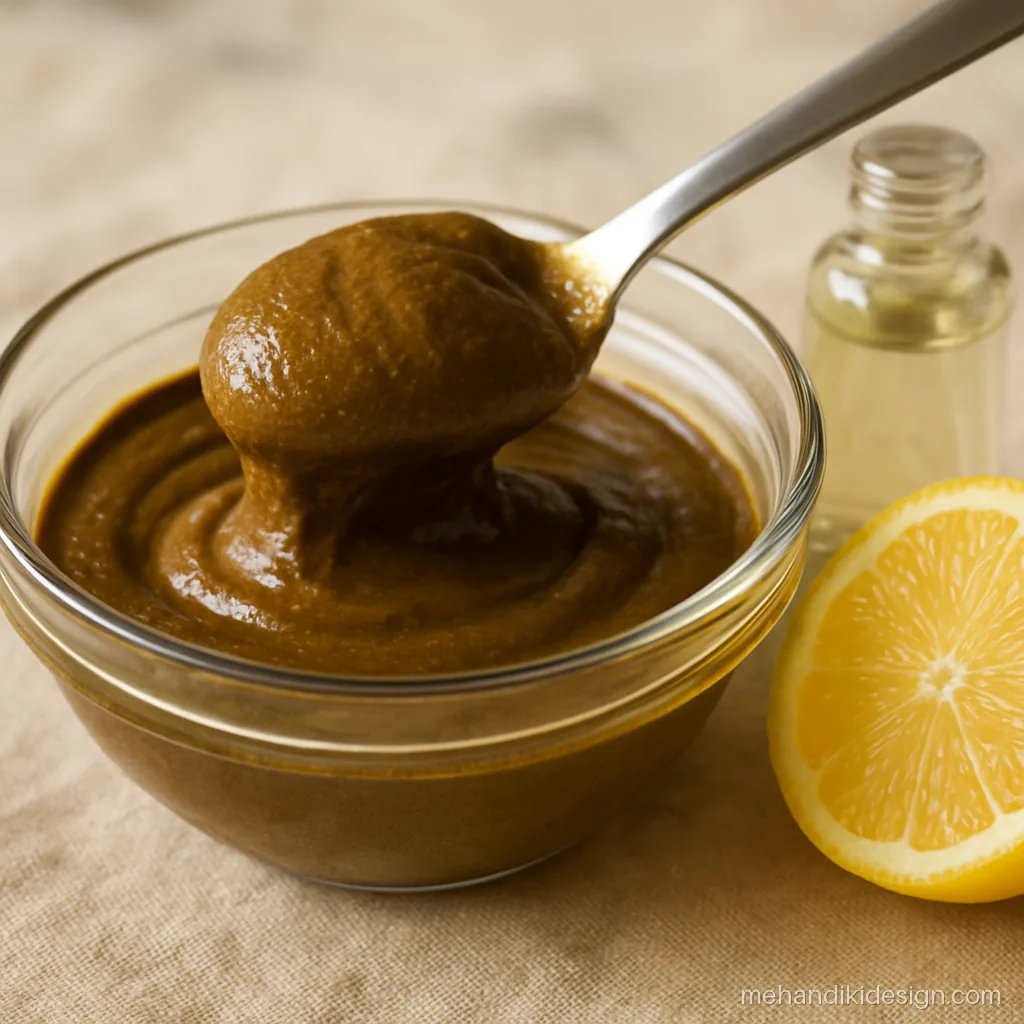
Good mehandi colour starts long before the cone. These photos show the plant, the leaves, the powder and a well-rested paste.
Mehandi Colour Stages from Orange to Maroon
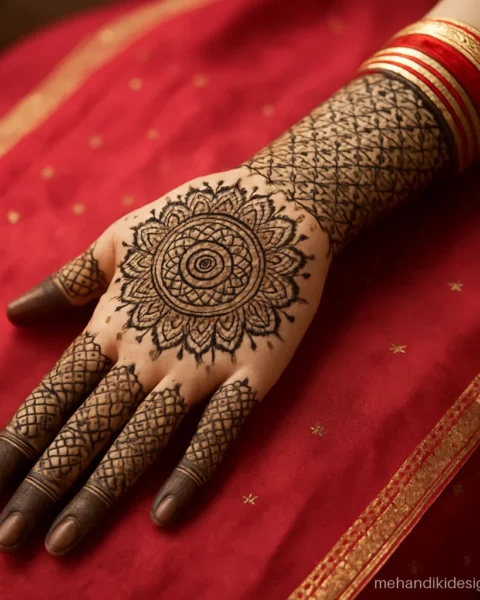
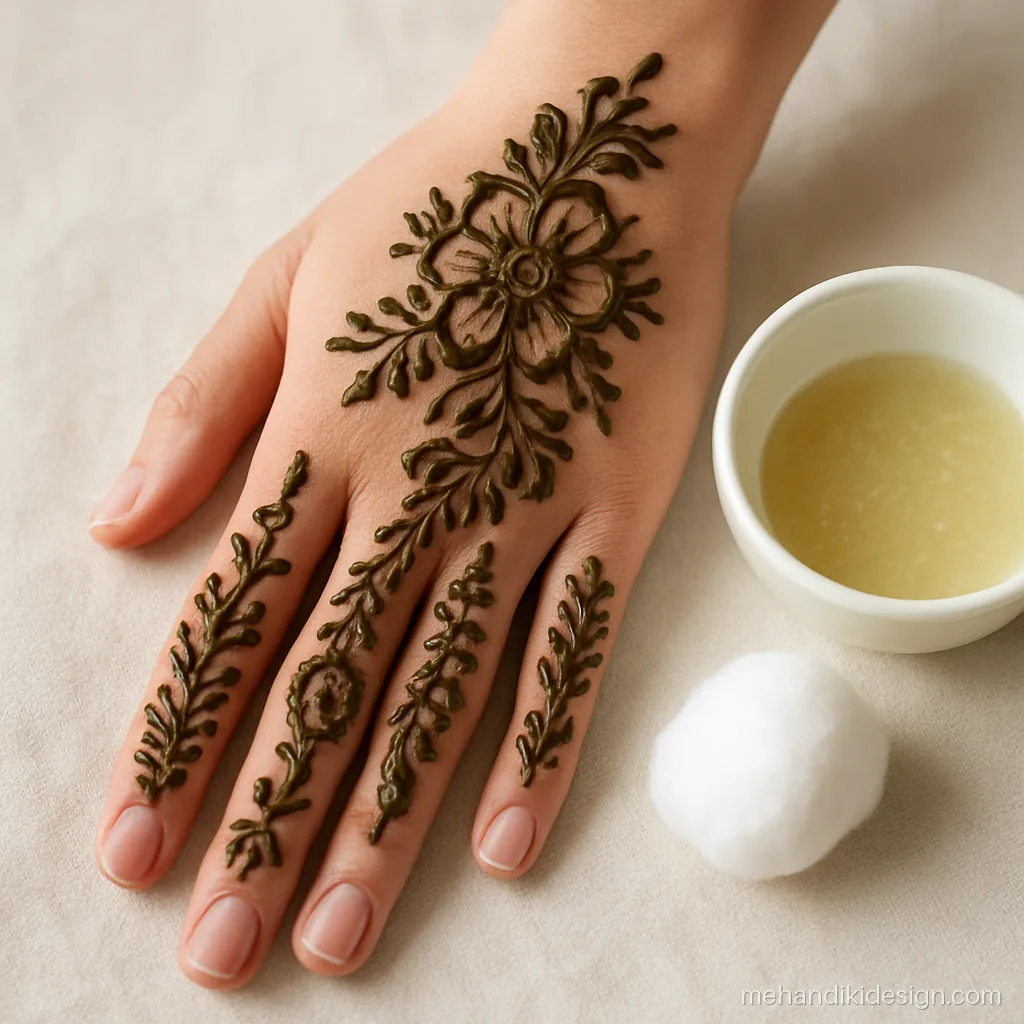
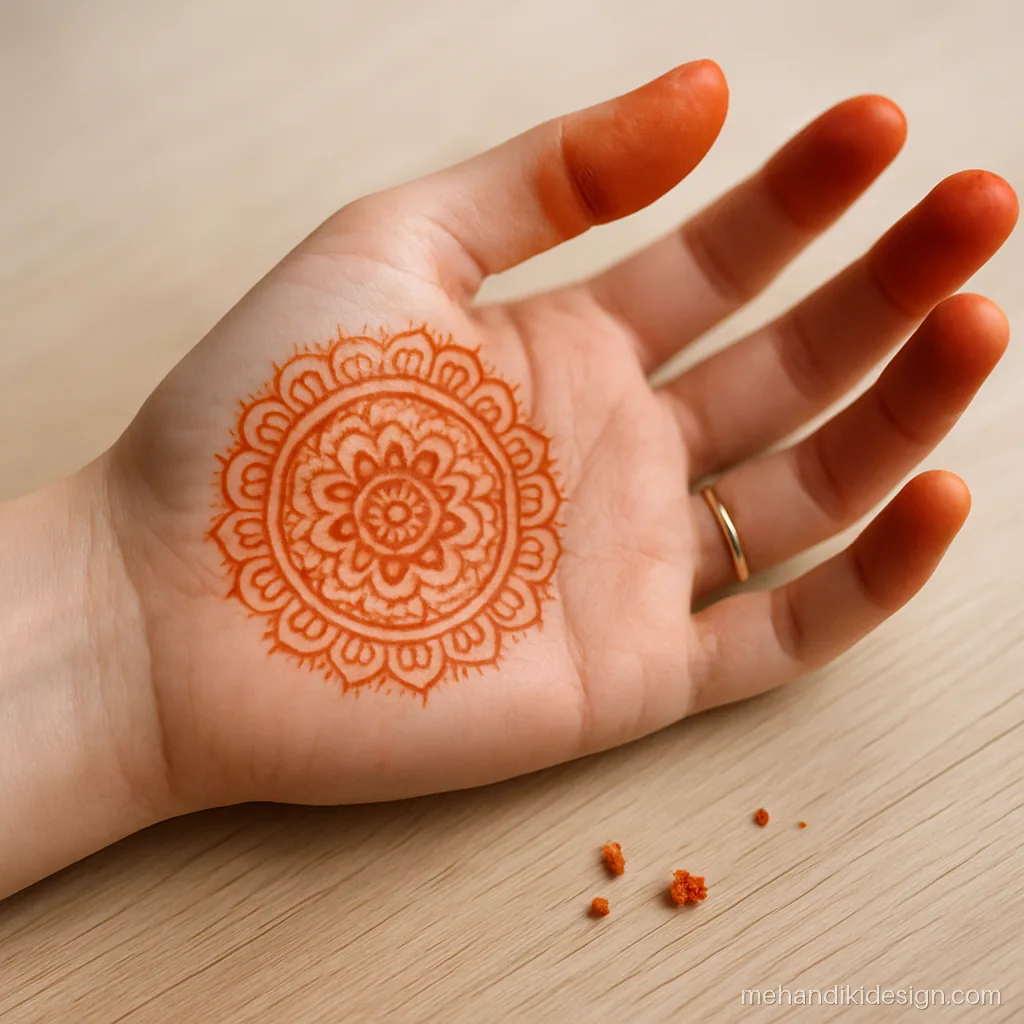
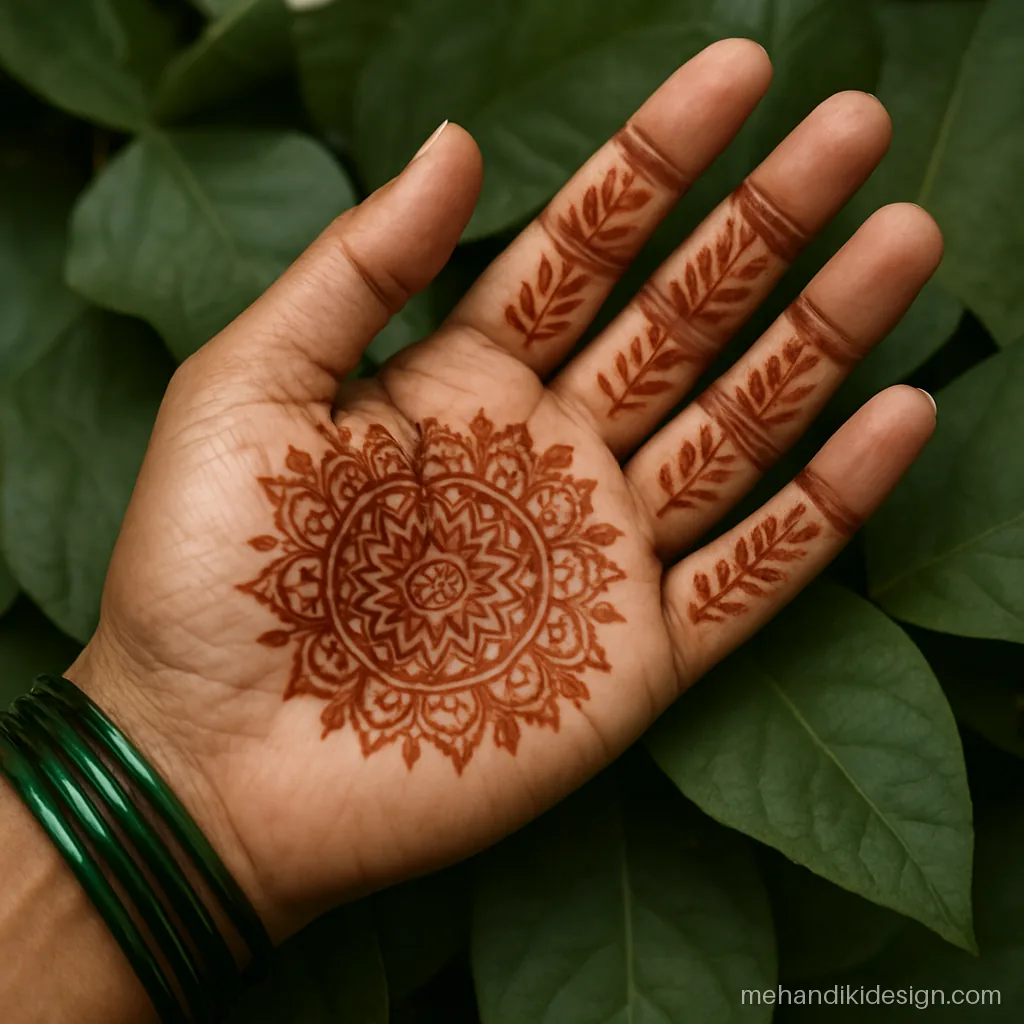
Natural henna changes colour for two days. Here is what the same type of design looks like at each stage.
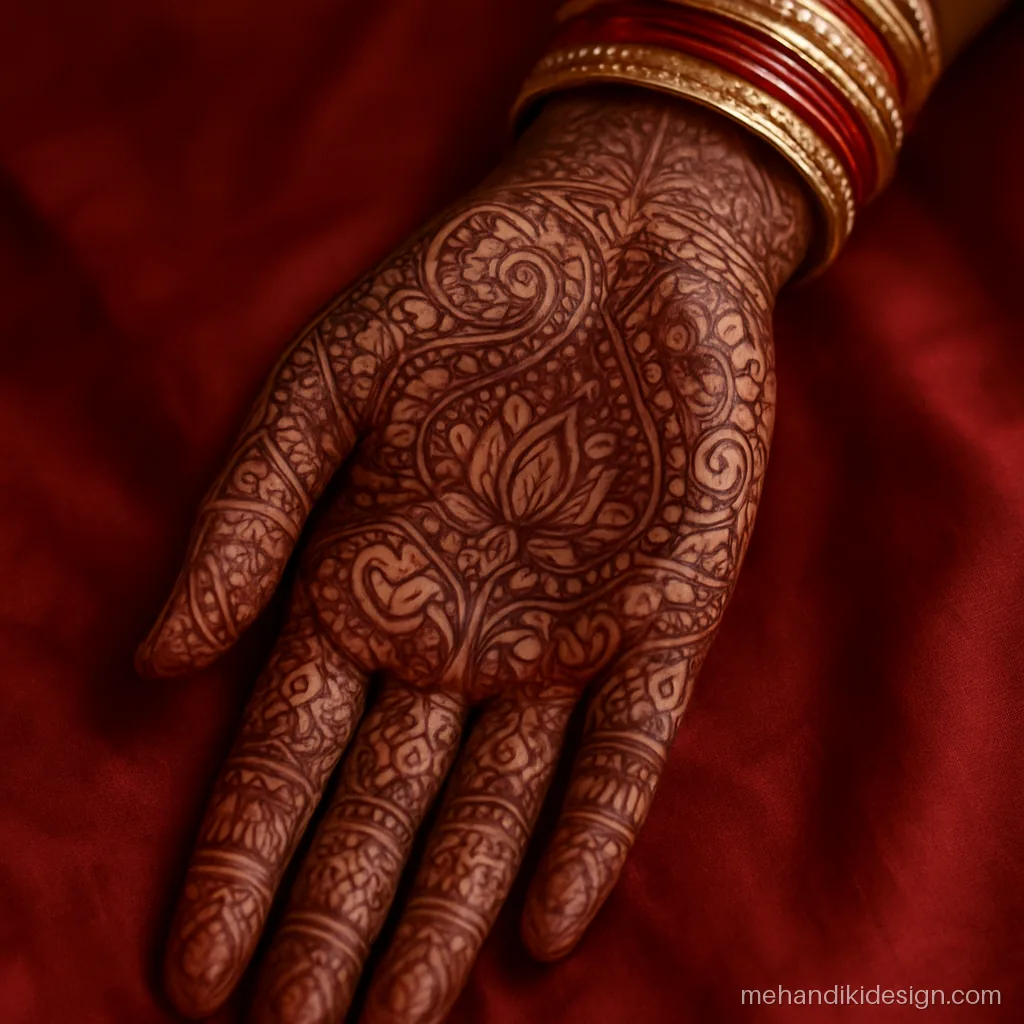
Where Mehandi Colour Comes From: The Mehandi Plant and Its Leaves
Natural henna is the dried, powdered leaves of the mehandi plant, Lawsonia inermis. It is a bushy shrub with small, shiny, oval green leaves and tiny fragrant white or cream flowers. It grows well in hot, dry places, and much of the henna used in India comes from Rajasthan, especially around Sojat in Pali district.
The colour sits inside the mehandi leaves as a dye called lawsone. When the leaves are dried, powdered and mixed with a mild acid like lemon juice, the lawsone is slowly released. It then binds to the outer layer of your skin. That is why henna stains only the top layer and fades as the skin naturally sheds, usually in 1 to 3 weeks.
- Fresh leaves ground at home on a sil-batta give a lovely colour but are hard to use for fine lines, because the paste is coarse.
- Dried leaf powder is what nearly all artists use. The finer it is sifted, the smoother your lines.
- Leaves from older, sun-grown plants usually carry more dye than young, shaded ones.
Can you grow a mehandi plant at home? Yes. It likes full sun, little water and well-drained soil. It is often grown as a hedge. Leaves picked from the top of a healthy plant in summer stain best.
Herbal Mehandi vs Black Henna: Know What You Are Using
Not every cone or powder sold as mehandi is real henna. Here is how to tell the difference.
| Type | What it is | Colour | Safe? |
|---|---|---|---|
| Natural or herbal mehandi | Pure dried Lawsonia inermis leaf powder, sometimes with essential oil | Orange at first, reddish brown to maroon in 24 to 48 hours | Yes, for almost everyone |
| Black henna | Often contains PPD, a hair dye chemical | Black within minutes or an hour | No. Can cause blisters, scars and lifelong allergy |
| Instant or chemical cones | May contain dyes or unknown chemicals for quick colour | Dark very fast, sometimes with a strange smell | Risky, avoid |
| Neutral henna (cassia) | A different plant used for hair | Almost no colour on skin | Safe but not useful for designs |
Signs of a good herbal mehandi: the powder is green to khaki and smells earthy like dried grass or hay. The paste stains orange when first scraped off, then darkens slowly. Warning signs: a jet black paste, a chemical smell, the words PPD or para-phenylenediamine on the pack, or a promise of black colour in minutes.
Always use natural henna on children and on anyone with sensitive skin. If you are unsure about a product, do a small patch test on the inner arm 24 hours before. For bacchon ki mehandi ideas that are quick and safe, see kids mehandi design.
How to Mix Mehandi Paste for the Darkest Colour
Homemade paste almost always gives a better mehandi colour than old shop cones. This is the recipe we use for weddings.
- Sift the powder. Pass 50 grams of fresh herbal mehandi powder through a fine cloth or a tea strainer two or three times. This removes twigs and makes lines smooth.
- Add acid. Mix in fresh lemon juice, a little at a time, until the powder looks like thick mashed potato. Some artists use strong black tea or water boiled with tea leaves instead.
- Add essential oil. Add about 1 teaspoon of eucalyptus, clove or tea tree oil. These oils help the dye come out and give a deeper stain. Skip eucalyptus and tea tree for young children.
- Let it rest. Cover and keep it in a warm place for 6 to 12 hours. This is called dye release. When the surface turns slightly brown, it is ready.
- Loosen and fill. Stir in a little sugar and more lemon or water until it is like toothpaste. Sugar keeps the paste sticky so it stays on longer. Fill cones and use within a day or freeze them.
Want to roll your own cones and learn the basic strokes? Our mehandi kaise lagaye guide covers it with practice sheets.
How Long to Keep Mehandi On, and What to Do While It Dries
- Prepare the skin. Wash with plain soap, dry well and do not apply cream, sunscreen or oil before mehandi. Oil blocks the dye.
- Keep it on long. For a normal design, keep the paste on for at least 4 to 8 hours. For a bride, overnight (8 to 12 hours) gives the richest colour.
- Seal it. Once the paste is touch dry, dab on a lemon and sugar mix with cotton. Do this 2 or 3 times. It stops cracking so the paste stays in contact with the skin.
- Keep the hands warm. Henna stains better on warm skin. In winter, sit near a heater or wrap the hands loosely in tissue and a cotton cloth. Cold hands give a lighter mehandi ka rang.
- Sleep with it safely. Wrap the dried design in tissue and an old cotton sock or medical tape so it does not smudge the bedsheet.
Aftercare: The First 24 to 48 Hours Decide Your Mehandi Colour
- Scrape, do not wash. Remove the dried paste with a blunt butter knife or the back of a spoon. Rub off small bits with your fingers.
- Use clove smoke. Heat a few cloves on a tawa and hold your hands carefully above the smoke for a minute or two. This is a traditional way to warm the skin and deepen the colour. Keep the hands at a safe height.
- Apply mustard oil or balm. Rub a little mustard oil, coconut oil or lip balm over the design. It protects the stain from water.
- Stay away from water for 12 to 24 hours. Water stops the colour from developing. If you must wash, oil the design first.
- Avoid soap, sanitiser, bleach and chlorine. These lighten the stain quickly. Wear gloves for washing dishes or clothes in the first week.
- Wait for it. The colour keeps darkening for 24 to 48 hours. Do not judge it on the first evening.
Why Mehandi Colour Is Light, and How to Fix It Next Time
| Problem | Likely reason | Fix next time |
|---|---|---|
| Pale orange after 2 days | Old powder, paste not rested, or paste kept on too short | Use fresh powder, rest paste 6 to 12 hours, keep on 6+ hours |
| Back of the hand lighter than palm | Thinner, cooler skin | Keep on longer and warm the hands |
| Patchy colour | Paste cracked and fell off | Seal with lemon and sugar 2 to 3 times |
| Colour faded in 3 days | Lots of washing, soap or sanitiser | Oil before washing, wear gloves |
| Black colour in an hour | Chemical or PPD cone | Stop using it and switch to natural henna |
Also remember that every body is different. Palms and fingertips always take the darkest colour, and the forearm takes the lightest. Warm, well-hydrated skin stains better than dry, cold skin.
Common questions
How to make mehandi colour dark naturally?
Use fresh herbal mehandi powder, rest the paste with lemon juice and essential oil for 6 to 12 hours, and keep it on the skin for at least 6 hours. Seal it with lemon and sugar, scrape it off without water, and apply mustard oil. Then avoid water for 12 to 24 hours.
Why is my mehandi orange and not dark?
Natural henna is always orange when you first scrape it off. It darkens to reddish brown over the next 24 to 48 hours. If it stays orange after two days, the powder was old or the paste was kept on too short a time.
Which part of the mehandi plant is used?
The leaves. Mehandi leaves are dried and ground into powder. The dye, called lawsone, is found mainly in the leaves, so the stems and flowers are not used for colour.
Is black henna safe to use?
No. Black henna often contains PPD, a chemical that can cause burns, blisters, scars and a permanent allergy. Real henna never stains black. Choose natural herbal mehandi, especially for children.
How long should I keep mehandi on for the best colour?
Keep it on for 4 to 8 hours for a normal design. Brides usually keep it on overnight. Longer contact with warm skin gives a deeper mehandi ka rang.
Does a menthol pain balm really darken mehandi?
Many women apply a menthol balm after scraping because the warmth may help the colour develop. It is optional. Mustard oil, clove smoke and simply avoiding water work just as well, and are gentler on sensitive skin.